

The Confusion Is Real
You’ve heard of Square. You’ve probably seen both “Square POS” and “Square Online” mentioned somewhere. So you’re asking the obvious question. Are these the same thing? Do you need both? Which one actually fits your St. Louis business?
You’re not the only one asking. Most business owners assume these are interchangeable. They’re not. They’re two different products built to solve two different problems.
Once you understand what each one actually does, the choice gets a lot easier.
Square POS: Your In-Store Payment System
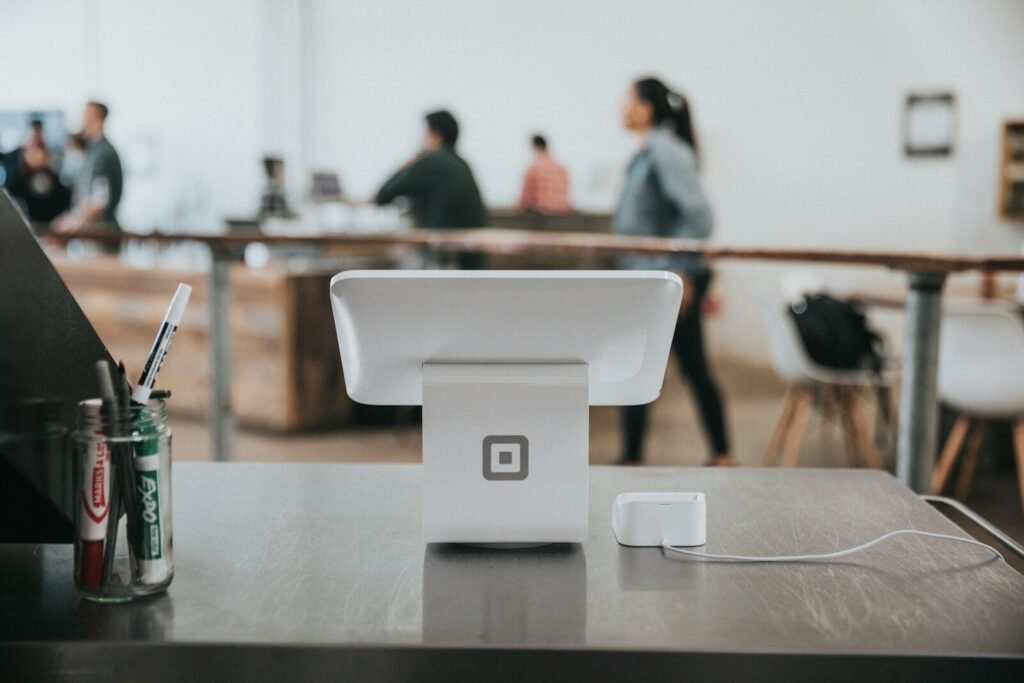
Square POS is what you use when a customer is standing in front of you. It handles in-person payments, real-time inventory as items sell, receipts, and daily sales reporting.
Picture a boutique in the Delmar Loop. A customer tries on a few pieces and wants to buy them. You ring them up on your Square terminal, take the payment, and hand over a receipt. That’s Square POS doing its job.
What it doesn’t do is give you a place for customers to shop online. Square POS on its own is for face to face transactions only.
Square POS features include:
Tap, chip, and swipe payments. Offline mode that syncs once you’re back online. Real-time inventory tracking. Staff clock in and sales tracking. A customer directory for repeat buyers and loyalty. Built-in reporting.
Square POS cost
Hardware ranges from $59 for the contactless reader up to $899 for the Square Register, paid once upfront. You can see the full hardware lineup on Square’s official hardware page. The standard in-person processing rate is 2.6% plus 15 cents per transaction. There’s no required monthly software fee at the free tier, since Square makes its money on processing.
Square Online: Your E-Commerce Website
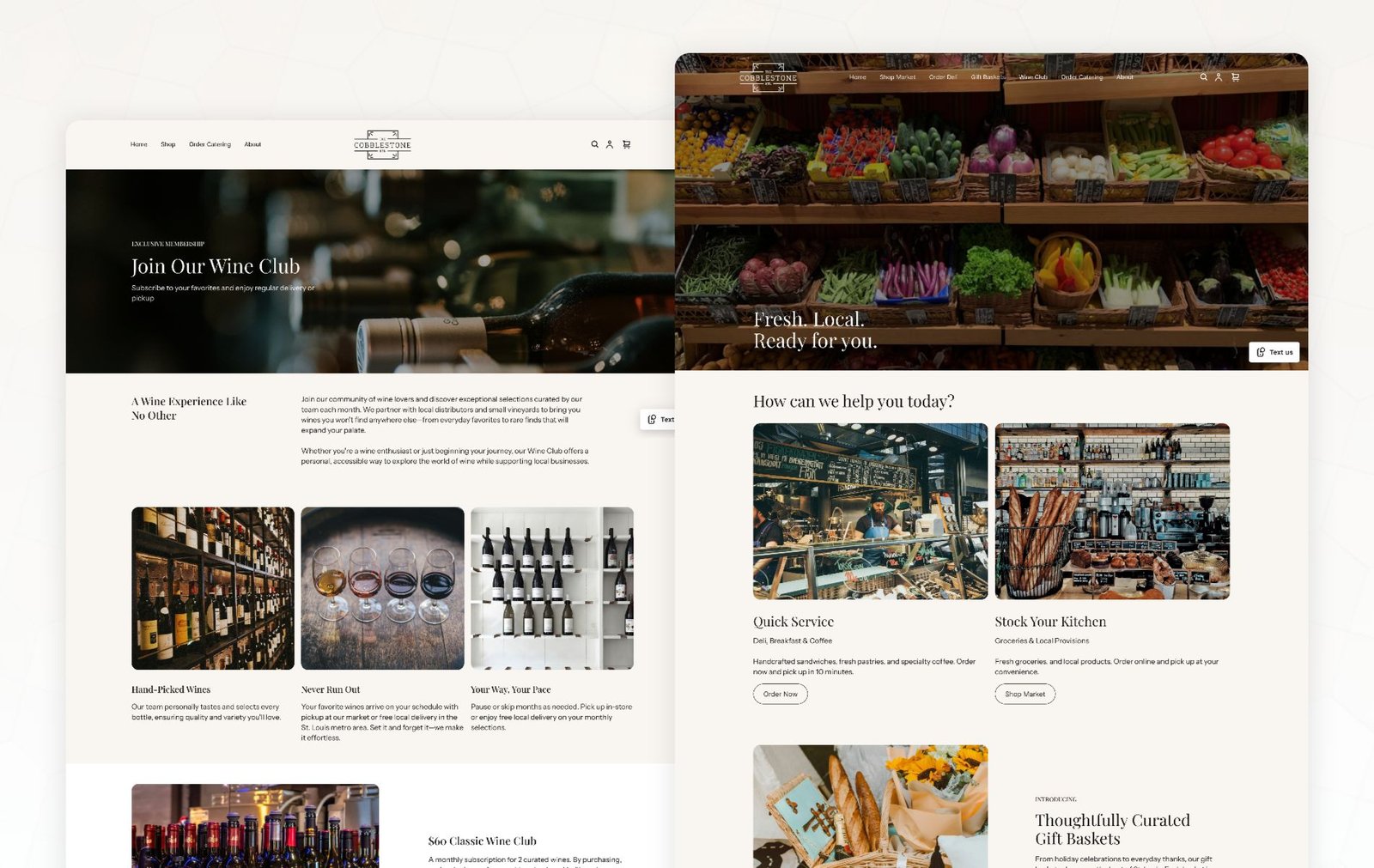
Square Online is a website builder and online store rolled into one. It’s what lets customers buy from you when your store is closed, or when they’re nowhere near St. Louis.
Same boutique owner. It’s a Sunday night. Someone finds the store through a Google search for boutiques in St. Louis, lands on the Square Online store, and buys a dress before bed. The order shows up ready to process the next morning.
Square Online isn’t built for face to face payments. It’s the channel for customers shopping from their phone or laptop.
Square Online features include:
A drag and drop site builder with no coding required. A full product catalog. Shopping cart and checkout. Built-in email marketing. Inventory that syncs with your in-store system if you’re running Square POS too. Mobile responsive design and basic SEO tools.
Square Online cost:
Square now runs on three tiers. Free covers the basics with Square branding included. Square Plus runs $49 a month per location and unlocks advanced features across all business types. Square Premium is $149 a month per location and includes the lowest processing rates. You can check current plan details on Square’s official pricing page. Online transactions typically run higher than in-person rates, so it’s worth checking your current rate in your Square dashboard.
Comparing Square POS and Square Online
Here’s how the two actually stack up once you look past the marketing.
Where the sale happens
Square POS needs a customer in front of you. Square Online needs a customer with a phone or laptop, anywhere, anytime. This is the core difference everything else follows from.
Setup time
Square POS is fast. Plug in the hardware, connect it to your account, and you can take a payment within the hour. Square Online takes more upfront work since you’re choosing a domain, building out product pages, and setting up a storefront rather than a checkout counter.
Cost structure
Square POS has no required monthly fee at the base tier. You pay for hardware once and pay processing fees per transaction. Square Online can also run free, but most St. Louis businesses that want a fully branded, feature-complete store end up on Plus or Premium.
Inventory management
Both track inventory well on their own. The real value shows up when you run them together, since a sale on either channel updates the other in real time without manual entry.
Design and branding
Square POS isn’t a design tool. It’s a checkout system. Square Online is where your brand shows up online, with templates, custom domains, and a storefront customers actually browse.
Who each is built for
Square POS fits any business taking payments in person. Square Online fits any business that wants sales beyond foot traffic, whether that’s a boutique expanding online or a service business with no physical location at all.
If your catalog gets into the hundreds of products with heavy variants, it’s worth comparing against Shopify, which handles larger catalogs with more flexibility.
So Which One Do You Actually Need?
It comes down to how your customers actually buy from you.
You need Square POS if customers come to a physical location like a store, restaurant, salon, or food truck, and you’re taking payment face to face.
You need Square Online if you want to sell beyond your physical location, customers are shopping from home, or you’re running a business with no storefront at all, like a service booking business or a print on demand shop.
You need both if you have a physical location and want online sales too, and you want your inventory to stay accurate across both without doing double the data entry. This is the most common setup for growing St. Louis businesses.
How They Work Together
When you run Square POS and Square Online together, your inventory syncs automatically. A dress sold online updates your in-store count immediately. A dress sold in-store updates your online listing the same way.
That sync is what prevents the worst case scenario. A customer orders online for an item that already sold in your store an hour earlier.
A St. Louis Example
Consider a women’s boutique with a storefront in the Delmar Loop. At the counter, Square POS handles walk-in customers trying on clothes and checking out. On the website, Square Online picks up the customers who found the shop through a Google search for a St. Louis boutique or through Instagram.
When a shipment of new inventory comes in, it gets entered once. Both systems reflect the same stock count. As pieces sell through either channel, the numbers update on their own.
That’s a business selling around the clock instead of only during store hours.
Which One Should You Start With?
If you don’t have a physical location yet, start with Square Online. You can be live in a few weeks without needing retail space or staff.
If you already have a storefront, get Square POS running well first, then add Square Online once your in-person operation is solid.
If you have the budget and know you want both from day one, setting them up together isn’t much more work than doing one alone, and it saves you a second setup project later.
Making the Right Choice
Before deciding, ask yourself three questions. Do your customers come to you in person or shop from home? Do you want to sell online at all? Do you need your inventory accurate across more than one channel?
If the answer to any of those points toward complexity, it’s worth talking it through with someone who sets these up regularly rather than guessing.
As a Square Online Certified Partner in St. Louis, we help businesses figure out exactly this, whether that means Square POS, Square Online, or both running together.
Ready to Get Set Up?
If you’re in St. Louis and weighing Square POS against Square Online, or trying to figure out if you need both, we can walk you through it. We handle setup for both platforms and can tell you honestly which one fits your business.
FAQ
Can I use Square POS without Square Online?
Yes. Square POS runs entirely on its own for in-person sales. You don’t need a website or online store to use it.
Can I use Square Online without Square POS?
Yes. Square Online works independently for businesses selling only online, including those with no physical location at all.
Do I get a website with Square POS?
No. Square POS handles payment processing only. A website requires Square Online or a separate platform like Shopify.
Does my inventory sync in real time between Square POS and Square Online?
Yes, when both are set up together. A sale on either channel updates stock across both automatically, so you avoid overselling an item that’s already gone.
How much does it cost to run Square POS and Square Online together?
It depends on your plan. At the free tier, you pay processing fees only. Once you move to Square Plus or Premium, the monthly cost applies per location, and both your in-person and online store are covered under the same plan.
Is Square Online good enough for a growing product catalog?
For most local St. Louis retailers, yes. If your catalog gets into the hundreds of products with heavy variants, it’s worth comparing against Shopify, which handles larger catalogs with more flexibility.
How do I know which platform is right for my St. Louis business?
It depends on how your customers buy from you. A quick consultation with a Square Online Certified Partner is the fastest way to get a clear answer without guessing.
